

A circular economy keeps materials in use for as long as possible through reuse, repair, and recycling instead of disposal.
Recycled products are central to this model because they turn waste into useful goods, reduce demand for virgin resources, save energy, and cut landfill waste and emissions.
For businesses, they lower costs and improve resource efficiency. For households, they support responsible consumption and cleaner communities.
What Is a Circular Economy?
A circular economy is an economic system that minimizes waste and makes the most of available resources. It focuses on designing products that can be reused, repaired, refurbished, and recycled instead of being discarded after a single use. This approach keeps materials circulating within the economy, reducing the need for new raw materials and supporting long-term sustainability.
Definition of Circular Economy
A circular economy is a production and consumption model that extends the life of products and materials. It encourages businesses and consumers to reduce waste, recover valuable resources, and recycle materials into new products. By keeping resources in use for as long as possible, a circular economy reduces environmental impact while creating economic value.
Linear Economy vs Circular Economy
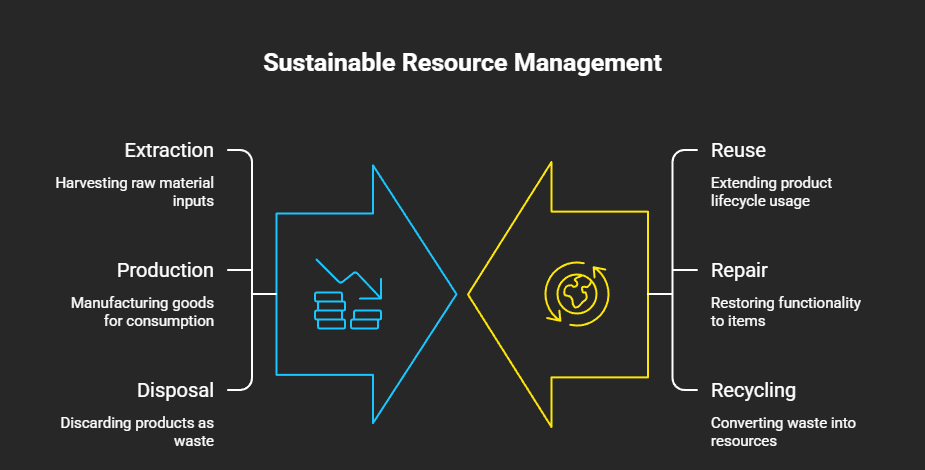
A linear economy follows a “take, make, use, and dispose” model. Raw materials are extracted, turned into products, used, and then discarded as waste. This process leads to resource depletion, increased pollution, and growing landfill waste.
In contrast, a circular economy keeps products and materials in continuous use through reuse, repair, remanufacturing, and recycling. Recycled products help close this loop by turning waste into valuable resources, reducing the demand for virgin materials and supporting sustainable manufacturing.
Why Circular Economy Matters
The world’s natural resources are limited, while demand for products continues to increase. A circular economy helps address this challenge by reducing waste generation, conserving raw materials, lowering carbon emissions, and protecting ecosystems. It also supports businesses by improving resource efficiency, reducing production costs, and creating new opportunities for innovation.
For organizations like Kerala Ecoplas, adopting circular economy principles means collecting plastic waste, recycling it into durable products, and preventing valuable materials from ending up in landfills or the environment. These efforts contribute to cleaner communities and a more sustainable future.
Main Principles of a Circular Economy
A circular economy is built on principles that reduce waste, improve resource efficiency, and protect the environment. These principles help businesses, governments, and individuals use materials more responsibly while supporting sustainable economic growth. Recycled products are essential because they keep valuable materials in circulation and reduce dependence on new resources.
Eliminate Waste and Pollution
The first principle is to prevent waste and pollution before they are created. Products should be designed using recyclable, reusable, and durable materials. Manufacturers can reduce unnecessary packaging, improve production efficiency, and minimize harmful emissions. Recycling plastic, metal, paper, and glass helps divert waste from landfills and reduces environmental pollution.
Keep Products and Materials in Use
A circular economy extends the life of products through reuse, repair, refurbishment, remanufacturing, and recycling. Instead of discarding materials after one use, they are recovered and transformed into new products. Recycled plastic products, recycled packaging, and construction materials made from recycled content help maintain the value of resources for longer periods while reducing the need for virgin raw materials.
Regenerate Natural Systems
A circular economy aims to protect and restore natural ecosystems. By reducing raw material extraction and encouraging responsible resource management, it helps preserve forests, water resources, soil quality, and biodiversity. Recycling also lowers pollution levels and supports healthier ecosystems by reducing waste entering landfills, rivers, and oceans.
Decouple Economic Growth from Resource Consumption
Economic growth should not depend on continuously extracting more natural resources. A circular economy enables businesses to grow by improving resource efficiency, using recycled materials, adopting innovative manufacturing processes, and creating long-lasting products. This approach supports sustainable manufacturing, reduces production costs, lowers carbon emissions, and builds resilient supply chains while conserving valuable natural resources.
How Recycled Products Conserve Natural Resources
Recycled products help conserve natural resources by reducing the need to extract new raw materials. Instead of relying on reused resources, manufacturers can use recycled materials to produce new goods. This supports a circular economy, improves resource efficiency, and ensures valuable materials remain available for future generations.
Reducing Raw Material Extraction
Manufacturing products from recycled materials reduces the demand for natural resources such as timber, minerals, and fossil fuels. Every recycled plastic bottle, paper sheet, or metal can replaces the need for newly extracted materials. This lowers environmental damage caused by logging, quarrying, drilling, and other resource-intensive activities.
Conserving Petroleum Through Plastic Recycling
Most plastics are produced from petroleum, a non-renewable resource. Recycling plastic allows manufacturers to reuse existing plastic instead of producing new plastic from crude oil. Recycled plastic can be transformed into products such as outdoor furniture, waste bins, road safety items, construction materials, and packaging. This reduces petroleum consumption while supporting sustainable manufacturing and plastic waste management.
Minimizing Mining Activities
Recycling metals such as aluminum, steel, and copper decreases the need for mining. Mining consumes large amounts of energy, water, and land while generating significant environmental impacts. Recovering metals from used products conserves natural deposits, reduces habitat destruction, and lowers pollution associated with mineral extraction and processing.
Maintaining Long-Term Resource Availability
Natural resources are finite, making responsible resource management essential for long-term sustainability. Recycling extends the life of valuable materials by keeping them in continuous use through collection, processing, and remanufacturing. Businesses that incorporate recycled materials into their operations strengthen supply chains, reduce dependence on scarce resources, and contribute to a resilient circular economy. By choosing recycled products, consumers also help preserve natural resources for future generations.
Environmental Benefits of Recycled Products
Recycled products provide significant environmental benefits by reducing waste, conserving energy, and lowering pollution. Using recycled materials instead of virgin resources supports a circular economy and helps create a cleaner, healthier environment. These benefits extend from manufacturing facilities to households and communities.
Lower Energy Consumption
Manufacturing products from recycled materials generally requires less energy than producing them from raw materials. Recycling processes eliminate many energy intensive extraction and refining steps. Lower energy consumption reduces operating costs, conserves natural resources, and supports sustainable manufacturing practices.
Reduced Greenhouse Gas Emissions
Using recycled materials helps reduce greenhouse gas emissions throughout the production process. Less energy use means fewer carbon emissions from manufacturing and transportation. Recycling also decreases emissions associated with extracting, processing, and transporting virgin raw materials, helping businesses reduce their carbon footprint.
Diverting Waste from Landfills
Recycling keeps valuable materials out of landfills by converting waste into new products. Plastic, paper, glass, and metal can all be collected, processed, and reused. This reduces landfill overflow, prevents soil and groundwater contamination, and supports effective waste management systems.
Preventing Ocean Plastic Pollution
Proper collection and recycling of plastic waste prevent it from entering rivers, lakes, and oceans. Recycled plastic products reduce the amount of discarded plastic that can harm marine life and coastal ecosystems. Strengthening recycling programs also encourages responsible disposal and helps build cleaner communities.
Protecting Biodiversity
Reducing resource extraction and preventing pollution help protect forests, wetlands, oceans, and wildlife habitats. Recycling lowers the pressure on natural ecosystems by decreasing mining, logging, and fossil fuel extraction. As a result, plants and animals face fewer environmental threats, supporting biodiversity and long-term ecological balance.
Economic and Business Benefits
A circular economy creates value for businesses by improving resource efficiency and reducing operational costs. Recycled products help manufacturers lower production expenses, strengthen supply chains, and develop sustainable business practices. At the same time, recycling supports economic growth by creating jobs and encouraging innovation.
Lower Manufacturing Costs
Using recycled materials often costs less than sourcing and processing virgin raw materials. Manufacturers can reduce spending on material procurement, energy, and waste disposal. Lower production costs also help businesses offer competitive prices while improving profitability.
Creating Green Jobs
The recycling industry generates employment across the entire value chain. Jobs are created in waste collection, material sorting, recycling, product manufacturing, quality control, transportation, and environmental management. As demand for recycled products grows, more opportunities emerge for skilled workers, entrepreneurs, and local communities.
Supporting Sustainable Innovation
Businesses are investing in new technologies and product designs that make better use of recycled materials. Innovations in recycling processes, eco-friendly product design, and sustainable manufacturing enable companies to produce durable, high-quality products with a lower environmental impact. These advancements also help businesses meet customer expectations for environmentally responsible products.
Strengthening Supply Chains
Recycled materials provide businesses with a reliable alternative to reused resources. By incorporating recycled inputs into manufacturing, companies reduce dependence on fluctuating raw material supplies and global market disruptions. Stronger supply chains improve business resilience, support long-term resource availability, and contribute to a more stable circular business model.
Circular Business Strategies
Businesses play a vital role in building a circular economy by adopting strategies that reduce waste and maximize resource use. Circular business strategies focus on keeping materials in circulation, improving product value, and minimizing environmental impact. These practices help organizations achieve long-term sustainability while increasing operational efficiency.
Industrial Symbiosis
Industrial symbiosis is a collaborative approach where one company’s waste becomes another company’s raw material. Instead of disposing of by-products, businesses exchange reusable materials that can be processed into new products. This reduces waste generation, lowers production costs, conserves natural resources, and improves resource efficiency across industries.
Upcycling Waste into Valuable Products
Upcycling transforms discarded materials into products with greater value and functionality. Unlike traditional recycling, which may reduce material quality, upcycling creates durable and innovative products from waste. Recycled plastic can be converted into outdoor furniture, park benches, construction materials, storage containers, and other long-lasting products. This approach extends the usefulness of materials while reducing landfill waste.
Extending Product Life Cycles
Extending product life cycles helps keep products and materials in use for longer periods. Businesses can achieve this by designing durable products, offering repair services, refurbishing used items, and remanufacturing components for reuse. These practices reduce the demand for virgin raw materials, decrease waste generation, and support sustainable manufacturing. Longer-lasting products also provide greater value for customers while contributing to a stronger circular business model.
Household Contributions to the Circular Economy
Households play an important role in supporting a circular economy through everyday choices. Simple actions such as repairing, reusing, recycling, and conserving resources help reduce waste and extend the life of valuable materials. When adopted consistently, these practices contribute to environmental sustainability and strengthen local recycling systems.
Repairing Instead of Replacing
Repairing damaged products instead of replacing them reduces waste and extends product life. Fixing furniture, appliances, electronics, and clothing minimizes the demand for new raw materials and lowers household expenses. Choosing repair over disposal also supports responsible consumption and reduces landfill waste.
Reusing Household Items
Many household items can be reused multiple times before being recycled. Glass jars can be used for storage, reusable shopping bags can replace single-use plastic bags, and old containers can serve new purposes around the home. Reusing products helps conserve resources, reduces waste generation, and supports a circular lifestyle.
Composting Organic Waste
Food scraps, garden waste, and other organic materials can be composted instead of being thrown away. Composting converts biodegradable waste into nutrient-rich compost that improves soil quality and supports home gardening. It also reduces the amount of waste sent to landfills and lowers methane emissions from decomposing organic waste.
Water Recycling at Home
Households can conserve water by collecting and reusing rainwater or safely reusing greywater for gardening, cleaning, and other non-drinking purposes. Installing water-efficient fixtures and fixing leaks further reduces water consumption. These practices help preserve freshwater resources and support sustainable resource management within a circular economy.
Challenges of Building a Circular Economy
Although a circular economy offers significant environmental and economic benefits, several challenges limit its widespread adoption. Overcoming these barriers requires collaboration between businesses, governments, recycling companies, and consumers. Investments in technology, infrastructure, and supportive policies are essential for creating an effective circular economy.
Complex Material Recovery
Many products are made from multiple materials that are difficult to separate during recycling. Mixed plastics, electronic devices, and composite packaging often require advanced recycling technologies. Improving product design and using recyclable materials can make material recovery more efficient and increase recycling rates.
Lack of Recycling Infrastructure
Many regions still lack adequate waste collection, sorting, and recycling facilities. Limited infrastructure reduces the amount of recyclable material that can be processed into new products. Expanding recycling plants, improving collection systems, and investing in modern recycling technologies are necessary to support a growing circular economy.
Market Demand Fluctuations
The demand and price of recycled materials can change based on market conditions. When virgin raw materials become cheaper, manufacturers may reduce their use of recycled materials. Creating stable markets, encouraging sustainable procurement, and increasing consumer demand for recycled products can improve the long-term viability of recycling industries.
Policy and Extended Producer Responsibility (EPR)
Government policies play a crucial role in promoting a circular economy. Extended Producer Responsibility (EPR) requires manufacturers to take responsibility for the collection, recycling, and safe disposal of their products after use. Strong EPR regulations encourage eco-friendly product design, improve recycling systems, reduce waste generation, and increase the use of recycled materials across industries.
Future of Recycled Products in a Circular Economy
The future of the circular economy depends on continuous innovation, supportive policies, and active participation from businesses and consumers. Advances in recycling technologies and sustainable manufacturing are making recycled products more accessible, efficient, and valuable. These developments will help reduce waste, conserve natural resources, and accelerate the transition to a more sustainable economy.
Comparison Table: Current Circumstances, Future Circumstances, and Solutions
| Aspect | Current Circumstances | Future Circumstances | Solutions |
| Recycling Technology | Many recycling systems still rely on manual sorting and basic processing methods, which can be slow and less accurate. | Recycling facilities will use smarter systems with sensors, robotics, and digital tracking for faster and cleaner material recovery. | Invest in advanced recycling equipment, improve waste collection systems, and expand technology-driven sorting facilities. |
| AI and Automation | Recycling operations often face high labor costs, contamination issues, and inconsistent sorting quality. | AI and automation will improve sorting accuracy, reduce contamination, and increase the efficiency of recycling plants. | Adopt AI-powered sorting tools, automate repetitive tasks, and train workers to manage advanced systems. |
| Government Regulations | Recycling policies vary by region, and some industries still produce large amounts of waste with limited accountability. | Stronger regulations will require more recycled content, less single-use plastic, and greater producer responsibility. | Enforce stricter waste policies, provide incentives for sustainable production, and support circular economy standards. |
| Consumer Awareness | Many consumers are aware of sustainability issues, but price and convenience still influence purchasing decisions. | Consumers will increasingly prefer recycled and eco-friendly products and expect brands to act responsibly. | Increase public education, improve product labeling, and promote the environmental benefits of recycled goods. |
| Sustainability Goals | Waste generation, pollution, and resource depletion remain major global challenges. | Recycled products will play a larger role in reducing emissions, conserving resources, and supporting climate goals. | Strengthen collaboration between governments, industries, and communities to scale circular economy practices. |
Conclusion
Recycled products are essential to building a successful circular economy. By keeping materials in use for longer, they reduce the need for reused resources, minimize waste, and lower environmental pollution. Recycling also supports resource conservation, reduces greenhouse gas emissions, and helps protect ecosystems for future generations.
For businesses, adopting recycled materials and circular economy practices improves resource efficiency, strengthens supply chains, reduces manufacturing costs, and encourages sustainable innovation. Strategies