

Modern consumers pay attention to sustainability. Many shoppers prefer brands that reduce waste and support environmental responsibility. Retail stores can use this trend to strengthen their marketing efforts while creating a positive brand image.
One effective approach is using recycled products in marketing activities. Recycled displays, eco-friendly signage, sustainable promotional materials, and recycled plastic products can help stores attract customers while reducing environmental impact. These solutions combine marketing goals with sustainability objectives.
Using recycled products for retail stores offers several benefits. They help reduce plastic waste, support circular economy practices, improve store branding, and demonstrate environmental commitment. Retailers can also differentiate themselves from competitors by adopting sustainable retail marketing strategies.
This guide explores practical in-store marketing ideas using recycled products. You will learn how recycled marketing materials, eco-friendly retail displays, sustainable promotions, and customer engagement initiatives can improve store visibility while supporting long-term sustainability goals.
Why Retail Stores Should Use Recycled Products for Marketing
Retail stores face increasing pressure to operate responsibly. Customers, communities, and business partners now expect brands to reduce waste and support sustainability. Using recycled products in marketing helps retailers meet these expectations while improving their brand image.
Recycled marketing materials allow businesses to promote products without relying heavily on new raw materials. From recycled paper signage to recycled plastic displays, these solutions support both marketing and environmental goals. They also demonstrate that a business is committed to reducing its environmental footprint.
Sustainable retail marketing is more than a trend. It has become a practical strategy for attracting eco-conscious consumers, strengthening customer trust, and supporting long-term business growth.
Growing Consumer Demand for Sustainability
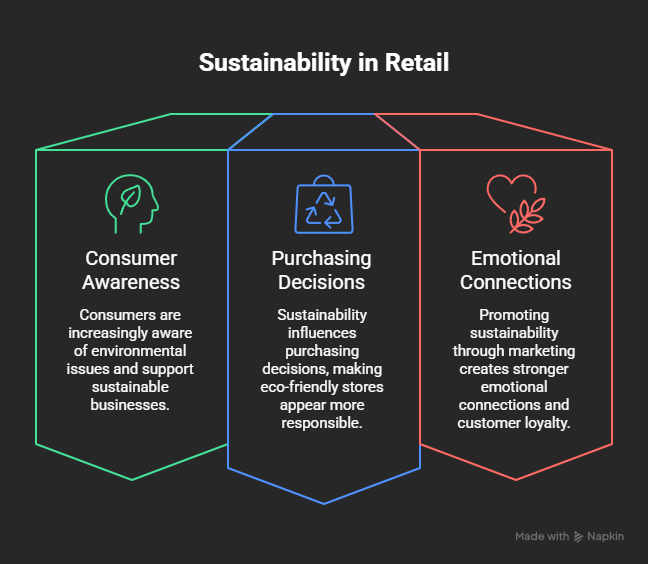
Consumers are becoming more aware of environmental issues. Many shoppers actively support businesses that use eco-friendly products and sustainable practices. Retail stores that showcase recycled products can appeal to these environmentally conscious customers.
Sustainability can influence purchasing decisions. Customers often view eco-friendly retail stores as more responsible and trustworthy. Visible use of recycled promotional materials helps communicate these values directly inside the store.
Stores that promote sustainability through marketing can also create stronger emotional connections with customers. This can lead to improved customer loyalty and repeat purchases over time.
Benefits for Brand Reputation
A strong sustainability message can improve how customers perceive a retail brand. Using recycled products for retail stores demonstrates environmental responsibility and commitment to waste reduction.
Eco-friendly in-store marketing helps retailers stand out from competitors. Recycled displays, sustainable signage, and environmentally friendly advertising materials create a positive impression on shoppers. These visual elements reinforce the brand’s commitment to sustainability.
Retailers can also use recycled marketing materials to support corporate social responsibility initiatives. This helps build credibility and strengthens relationships with customers, suppliers, and local communities.
Cost and Environmental Advantages
Many recycled marketing materials are durable and reusable. Retailers can use them for multiple campaigns, reducing long-term promotional costs. Reusable displays and signage also decrease the need for frequent replacements.
Using recycled plastic products and recycled paper materials helps reduce demand for virgin resources. This lowers waste generation and supports circular economy practices. Every recycled product used in marketing contributes to resource conservation.
The combination of cost savings, waste reduction, and improved brand image makes recycled products a practical investment for sustainable retail marketing. Businesses can achieve marketing objectives while supporting environmental goals at the same time.
Eco-Friendly Advertising Ideas
Eco-friendly advertising helps retail stores promote products while reducing environmental impact. Recycled and sustainable materials can be used to create attractive marketing campaigns that align with modern consumer values. These advertising methods support both brand visibility and sustainability goals.
Retailers can replace traditional promotional materials with recycled alternatives. This reduces waste, supports responsible resource use, and creates a stronger sustainability message throughout the store.
Recycled Paper Signage
Recycled paper signage is one of the easiest ways to introduce sustainable marketing into a retail environment. These signs can be used for promotions, product information, seasonal campaigns, and wayfinding throughout the store.
Using recycled paper demonstrates environmental responsibility while maintaining professional presentation standards. Many recycled paper products offer excellent print quality and durability.
Recycled Paper Posters
Recycled paper posters can promote discounts, new arrivals, and special events. They provide a sustainable alternative to traditional printed advertising materials.
Retailers can place these posters at entrances, checkout areas, and product sections. Well-designed recycled posters attract attention while reinforcing the store’s commitment to sustainability.
Bamboo-Based Sign Boards
Bamboo-based sign boards offer a durable and eco-friendly advertising solution. Bamboo grows quickly and requires fewer resources than many traditional materials.
These sign boards can display promotional messages, product categories, and brand information. Their natural appearance also enhances the visual appeal of eco-conscious retail stores.
Plant-Based Plastic Promotional Displays
Plant-based plastic displays provide a sustainable alternative to conventional plastic marketing materials. These displays can be used for product showcases, promotional stands, and point-of-sale advertising.
Many plant-based materials are designed to reduce dependence on fossil-fuel-based plastics. Retailers can use them to support green marketing initiatives while maintaining attractive product presentations.
These displays are especially useful for highlighting eco-friendly products and sustainability-focused campaigns within the store.
Sustainable Window Displays
Store windows are valuable marketing spaces. Sustainable window displays can attract customers while communicating environmental values before shoppers enter the store.
Retailers can use recycled plastic materials, reclaimed wood, recycled
Digital Alternatives That Reduce Waste
Digital marketing tools help retail stores reduce paper and plastic waste while improving customer convenience. These solutions support sustainable retail marketing by minimizing the need for printed promotional materials and disposable advertising products.
Many digital tools are cost-effective, easy to implement, and highly scalable. Retailers can communicate promotions, product information, and brand messages without generating unnecessary waste.
Digital Receipts
Digital receipts replace traditional paper receipts with electronic versions sent through email or mobile applications. This simple change can significantly reduce paper consumption in retail operations.
Customers can easily store, search, and access digital receipts when needed. Retail stores also benefit from lower printing costs and reduced paper waste.
Digital receipts can include promotional offers, loyalty program information, and product recommendations. This creates additional marketing opportunities without using physical materials.
E-Coupons and QR Code Promotions
E-coupons provide an eco-friendly alternative to printed discount vouchers. Customers can access offers through mobile devices, websites, or email campaigns.
QR codes can be placed on shelves, displays, packaging, and promotional signage. Shoppers can scan the codes to view discounts, product details, videos, or sustainability information.
These digital promotions reduce printing costs while increasing customer engagement. They also allow retailers to update offers quickly without replacing physical marketing materials.
Digital Product Catalogs
Digital product catalogs eliminate the need for large printed brochures and catalogs. Customers can browse products using tablets, touchscreens, websites, or mobile applications.
Retailers can update product information instantly without reprinting materials. This improves accuracy and reduces waste associated with outdated catalogs.
Digital catalogs can also include videos, product comparisons, customer reviews, and interactive features. These enhancements improve the shopping experience while supporting sustainable store operations.
| Traditional Marketing Material | Digital Alternative | Sustainability Benefit |
| Paper Receipts | Digital Receipts | Reduces paper waste |
| Printed Coupons | E-Coupons | Eliminates printing materials |
| Paper Catalogs | Digital Catalogs | Reduces resource consumption |
| Printed Promotions | QR Code Campaigns | Minimizes advertising waste |
By adopting digital alternatives, retail stores can improve operational efficiency, reduce environmental impact, and strengthen their sustainable retail marketing strategy.
dboard, and reusable decorative elements to create engaging displays. Seasonal themes can be updated without generating excessive waste.
Sustainable window displays help strengthen store branding, improve customer engagement, and demonstrate commitment to environmentally responsible business practices.
Sustainable Event Marketing Inside Retail Stores
In-store events help attract customers, increase engagement, and strengthen brand awareness. When planned with sustainability in mind, these events can promote products while reducing waste and supporting environmental goals.
Retail stores can use recycled products, reusable materials, and eco-friendly decorations to create memorable experiences. Sustainable event marketing demonstrates environmental responsibility and appeals to eco-conscious consumers.
Recycled Decoration Materials
Decorations play an important role in retail events. Instead of using single-use plastic decorations, retailers can choose recycled and reusable materials.
Recycled cardboard, recycled plastic products, reclaimed wood, and recycled paper decorations can create attractive event spaces. These materials help reduce waste while maintaining a professional appearance.
Stores can also reuse many decorations for future campaigns, making them both environmentally and financially beneficial.
Upcycled Furniture Displays
Upcycled furniture can be transformed into creative product display areas. Old pallets, wooden crates, unused shelves, and reclaimed materials can become attractive merchandising fixtures.
These displays add a unique visual element to retail events while promoting sustainability. Customers often appreciate innovative designs that demonstrate responsible resource use.
Upcycled furniture also supports circular economy practices by extending the life of existing materials rather than purchasing new fixtures.
Fabric Banner Promotions
Fabric banners provide a durable and reusable alternative to traditional vinyl promotional materials. They can be used for seasonal sales, product launches, and in-store events.
Many fabric banners are produced from recycled fibers or sustainable materials. They are lightweight, easy to store, and suitable for repeated use across multiple campaigns.
Because fabric banners last longer than many disposable advertising materials, they help reduce marketing waste over time.
Eco Awareness Campaigns
Retail stores can organize sustainability-focused events to educate and engage customers. These campaigns may include recycling awareness programs, sustainability workshops, or demonstrations of recycled products.
Stores can showcase how recycled materials are transformed into useful products. This helps customers better understand the value of recycling and waste reduction.
Eco awareness campaigns not only support community education but also strengthen the store’s reputation as an environmentally responsible business.
Benefits of Sustainable Event Marketing
| Sustainable Event Activity | Marketing Benefit | Environmental Benefit |
| Recycled Decorations | Enhances event appeal | Reduces material waste |
| Upcycled Displays | Creates unique branding | Supports reuse of materials |
| Fabric Banners | Long-term promotional use | Reduces disposable advertising |
| Eco Awareness Campaigns | Increases customer engagement | Promotes sustainability education |
Sustainable event marketing allows retail stores to attract customers, strengthen brand loyalty, and showcase their commitment to environmental responsibility through practical actions.
Community-Based Marketing Initiatives
Community-based marketing helps retail stores build stronger relationships with local customers while supporting environmental causes. These initiatives create positive brand visibility, encourage customer participation, and demonstrate a genuine commitment to sustainability.
By participating in local environmental programs, retailers can strengthen their reputation and connect with consumers who value responsible business practices.
Beach Cleanup Sponsorship Programs
Retail stores can sponsor beach cleanup activities and invite customers, employees, and local organizations to participate. These events help remove plastic waste from the environment while increasing community engagement.
Stores can provide reusable collection bags, recycled promotional materials, and eco-friendly merchandise during the event. Sharing event results through in-store displays and social media can further strengthen brand awareness.
Beach cleanup sponsorships show that a retailer is actively contributing to environmental protection rather than simply promoting sustainability through advertising.
Tree Planting Campaigns
Tree planting initiatives are a practical way for retailers to support environmental improvement projects. Stores can organize planting events or partner with local environmental groups.
Customers can be encouraged to participate through loyalty programs, purchase-based contributions, or special sustainability campaigns. For example, a store may plant one tree for every selected product sold.
These campaigns create positive customer experiences while demonstrating long-term environmental responsibility.
Recycling Collection Drives
Recycling collection drives encourage customers to bring recyclable materials to designated collection points within the store. Common materials may include plastic bottles, packaging materials, paper products, and used containers.
Retailers can offer rewards, discounts, or loyalty points to encourage participation. These programs increase customer engagement while helping divert waste from landfills.
Collection drives also provide an opportunity to educate customers about proper recycling practices and circular economy principles.
Local Sustainability Partnerships
Partnering with schools, environmental organizations, community groups, and recycling companies can expand the impact of sustainability efforts. These partnerships create opportunities for educational programs, awareness campaigns, and joint environmental projects.
Retail stores can host workshops, support recycling initiatives, or collaborate on sustainability events. Such partnerships increase community trust and enhance brand credibility.
Working with local organizations also helps retailers reach new audiences who value environmentally responsible businesses.
Benefits of Community-Based Marketing
| Community Initiative | Marketing Benefit | Sustainability Benefit |
| Beach Cleanup Programs | Positive brand exposure | Reduces environmental waste |
| Tree Planting Campaigns | Improves customer loyalty | Supports ecosystem restoration |
| Recycling Collection Drives | Increases store visits | Encourages waste diversion |
| Sustainability Partnerships | Strengthens brand trust | Expands environmental impact |
Community-based marketing initiatives allow retail stores to create meaningful connections with customers while supporting sustainability goals. These programs combine customer engagement, environmental responsibility, and long-term brand building in a practical and effective way.
Waste and Recycling Management as a Marketing Strategy
Waste and recycling management can do more than improve store operations. It can also become a powerful marketing strategy. Customers increasingly support businesses that actively reduce waste and promote sustainability.
Retail stores that visibly manage waste and recycling efforts can strengthen customer trust, improve brand reputation, and demonstrate environmental responsibility. These actions show that sustainability is part of daily operations rather than just a marketing message.
Conducting Waste Audits
A waste audit helps retailers understand what types of waste are generated within the store. This includes plastic packaging, paper waste, promotional materials, and product-related waste.
By identifying major waste sources, retailers can develop targeted waste reduction strategies. The results can also be shared with customers through sustainability reports, displays, or awareness campaigns.
Demonstrating measurable waste reduction efforts helps build credibility and supports transparent sustainability communication.
Installing Recycling Stations
Visible recycling stations encourage both customers and employees to participate in recycling programs. These stations can be placed near entrances, food courts, checkout areas, or customer service desks.
Clear labeling and educational signage help customers understand what materials can be recycled. Retailers can use recycled plastic bins and eco-friendly signage to further reinforce sustainability messaging.
Recycling stations create daily opportunities for customer engagement while helping divert waste from landfills.
Eco-Friendly Store Signage
Sustainable signage can communicate recycling policies, environmental goals, and waste reduction achievements. Retailers can use recycled paper, reclaimed materials, or reusable display systems for this purpose.
Signage may include recycling instructions, sustainability statistics, or information about the store’s environmental initiatives. This helps educate customers while strengthening the brand’s green image.
Well-designed eco-friendly signage makes sustainability visible throughout the customer journey.
Building a Green Team
A green team consists of employees who help lead sustainability initiatives within the store. Team members can promote recycling programs, monitor waste reduction efforts, and encourage participation among staff and customers.
Green teams can organize awareness campaigns, sustainability challenges, and educational activities. Their involvement helps create a culture of environmental responsibility throughout the organization.
Customers often notice when employees actively support sustainability initiatives, which can improve trust and brand perception.
Turning Sustainability Efforts Into Marketing Opportunities
| Waste Management Activity | Marketing Value | Environmental Impact |
| Waste Audits | Demonstrates transparency | Identifies waste reduction opportunities |
| Recycling Stations | Improves customer engagement | Increases recycling rates |
| Eco-Friendly Signage | Strengthens green branding | Promotes environmental awareness |
| Green Teams | Enhances brand credibility | Encourages sustainable behavior |
When retail stores actively manage waste and recycling, they create authentic sustainability stories that customers can see and trust. This strengthens brand reputation while contributing to long-term environmental goals.
Employee and Customer Engagement Programs
Sustainable marketing becomes more effective when both employees and customers actively participate. Engagement programs help create awareness, encourage responsible behavior, and strengthen a retail store’s sustainability culture.
By involving staff and shoppers in recycling and waste reduction initiatives, retailers can build stronger relationships while supporting environmental goals.
Sustainability Training for Employees
Employees play a key role in communicating sustainability initiatives to customers. Proper training helps staff understand recycling practices, waste reduction strategies, and the benefits of recycled products.
Training sessions can cover topics such as recycling procedures, sustainable product knowledge, eco-friendly customer service practices, and environmental policies. Well-informed employees can confidently answer customer questions and promote sustainability programs.
A knowledgeable workforce helps ensure that sustainability efforts are consistently applied throughout the store.
Customer Recycling Education
Customer education programs help shoppers understand how recycling supports environmental protection and waste reduction. Retail stores can provide educational materials through signage, digital displays, workshops, and awareness campaigns.
Information may include recycling tips, proper waste sorting methods, and the environmental benefits of recycled plastic products. Educational content can also highlight how customers contribute to sustainability through their purchasing choices.
Educated customers are more likely to participate in recycling initiatives and support environmentally responsible brands.
Measuring Diversion Rates
Diversion rate measures the percentage of waste that is recycled, reused, or diverted from landfills. Tracking this metric helps retailers evaluate the success of their waste management programs.
Stores can share diversion rate achievements with customers through sustainability reports, displays, and promotional campaigns. This demonstrates transparency and measurable environmental progress.
Publicly sharing results can strengthen trust and show that sustainability commitments are producing real outcomes.
Monitoring Recycling Performance
Regular monitoring helps retailers identify opportunities to improve recycling programs and reduce waste further. Key performance indicators may include recycling volumes, participation rates, material recovery levels, and waste reduction percentages.
Performance tracking allows businesses to set goals and measure progress over time. These results can also support sustainability marketing efforts by providing verifiable data.
Customers are more likely to trust environmental claims when they are supported by measurable performance indicators.
Benefits of Engagement Programs
| Engagement Activity | Business Benefit | Sustainability Benefit |
| Employee Training | Improves customer service | Strengthens sustainability culture |
| Customer Education | Increases participation | Promotes responsible behavior |
| Diversion Rate Tracking | Builds transparency | Measures waste reduction success |
| Recycling Performance Monitoring | Supports data-driven decisions | Improves recycling efficiency |
Employee and customer engagement programs help transform sustainability into a shared responsibility. When both groups participate, retail stores can achieve stronger marketing results while making a meaningful contribution to waste reduction and environmental protection.
Eco-Friendly Promotional Tools Made from Recycled Products
Eco-friendly promotional tools help retail stores advertise products while supporting sustainability goals. These marketing materials reduce waste, promote responsible resource use, and strengthen a store’s environmental image.
Many modern promotional products are made from recycled materials and can be reused across multiple campaigns. This makes them both cost-effective and environmentally responsible.
Eco Banners
Eco banners are produced using recycled fabrics, recyclable materials, or environmentally friendly printing methods. They provide an effective way to promote sales, product launches, and seasonal campaigns.
Unlike many disposable promotional materials, eco banners can be reused multiple times. Their durability helps reduce marketing waste while lowering long-term advertising costs.
Retail stores can place eco banners at entrances, checkout areas, and promotional sections to improve visibility and customer engagement.
Eco Flags
Eco flags are lightweight promotional tools commonly used to attract attention inside and outside retail stores. Many are manufactured using recycled polyester or other sustainable fabric materials.
These flags are ideal for highlighting special offers, new products, and store events. Because they are reusable and durable, they generate less waste than many traditional advertising materials.
Eco flags also help reinforce a retailer’s commitment to sustainable marketing practices.
Fabric Tension Frames
Fabric tension frames use reusable fabric graphics stretched across lightweight frames. They create professional promotional displays while reducing the need for disposable printed materials.
Retailers can easily replace the graphic fabric without replacing the entire frame structure. This reduces material consumption and lowers promotional costs over time.
Fabric tension frames are commonly used for product promotions, brand messaging, and sustainability campaigns within retail environments.
Recycled Plastic Promotional Displays
Recycled plastic promotional displays transform post-consumer or post-industrial plastic waste into useful marketing tools. These displays can be used for product showcases, information stands, and point-of-sale promotions.
They are durable, moisture-resistant, and suitable for long-term use. By using recycled plastic products, retailers demonstrate how waste materials can be converted into valuable business resources.
These displays also help communicate circular economy principles directly to customers through visible and practical applications.
Comparison of Eco-Friendly Promotional Tools
| Promotional Tool | Material Source | Key Benefit |
| Eco Banners | Recycled fabrics | Reusable and durable |
| Eco Flags | Recycled polyester | High visibility with less waste |
| Fabric Tension Frames | Reusable fabric graphics | Reduced material replacement |
| Recycled Plastic Displays | Recycled plastic materials | Supports circular economy practices |
Eco-friendly promotional tools allow retail stores to market products effectively while reducing environmental impact. They combine sustainability, functionality, and professional branding, making them valuable assets for modern retail marketing strategies.
How Recycled Products Support Retail Sustainability Goals
Recycled products help retail stores achieve sustainability goals while maintaining effective marketing and operational performance. By replacing virgin materials with recycled alternatives, retailers can reduce waste, conserve resources, and strengthen their environmental commitments.
These efforts not only benefit the environment but also improve brand reputation, customer trust, and long-term business sustainability.
Plastic Waste Reduction
Plastic waste is one of the biggest environmental challenges facing businesses today. Retail stores generate waste through packaging, promotional materials, product displays, and daily operations.
Using recycled plastic products helps reduce the demand for new plastic production. Recycled display stands, signage, promotional materials, and store fixtures keep existing materials in circulation and prevent them from becoming waste.
By incorporating recycled products into marketing activities, retailers can actively contribute to plastic waste reduction while promoting sustainability to customers.
Circular Economy Benefits
A circular economy focuses on keeping materials in use for as long as possible through recycling, reuse, and responsible resource management. Recycled products play a central role in supporting this system.
Retail stores that use recycled materials help create demand for recycled resources. This encourages recycling industries, reduces landfill waste, and supports more sustainable production practices.
Participating in the circular economy allows businesses to move beyond the traditional “use and dispose” model and adopt a more resource-efficient approach.
Improved Corporate Social Responsibility
Corporate Social Responsibility (CSR) reflects a company’s commitment to social and environmental well-being. Using recycled products demonstrates that a retailer is taking practical steps to reduce its environmental impact.
Customers, investors, suppliers, and community stakeholders increasingly value businesses that support sustainability. Visible use of recycled marketing materials and eco-friendly retail displays strengthens CSR initiatives and improves public perception.
Strong CSR programs can also create opportunities for partnerships, community engagement, and positive media exposure.
Long-Term Environmental Impact
The environmental benefits of recycled products extend beyond immediate waste reduction. Over time, recycled materials help conserve natural resources, reduce energy consumption, and lower greenhouse gas emissions associated with manufacturing.
Retail stores that consistently adopt recycled products contribute to broader sustainability goals while encouraging customers to make environmentally responsible choices.
Small changes made across multiple stores can create significant environmental benefits over the long term. This makes recycled products an important part of sustainable retail operations and marketing strategies.
Sustainability Benefits at a Glance
| Sustainability Goal | Contribution of Recycled Products |
| Plastic Waste Reduction | Decreases reliance on virgin plastics |
| Circular Economy Support | Keeps materials in productive use |
| Corporate Social Responsibility | Demonstrates environmental commitment |
| Resource Conservation | Reduces demand for raw materials |
| Long-Term Environmental Protection | Lowers waste and environmental impact |
By integrating recycled products into marketing, branding, and daily operations, retail stores can align business growth with environmental responsibility. This creates value for customers, communities, and the environment while supporting long-term sustainability objectives.
Common Challenges and Solutions
Many retail stores want to adopt sustainable marketing practices but face challenges during implementation. Understanding these obstacles and their solutions can help businesses transition more effectively to recycled marketing materials and eco-friendly promotional strategies.
Most challenges can be addressed through proper planning, employee involvement, supplier partnerships, and customer education.
Budget Concerns
Some retailers assume that sustainable marketing materials are more expensive than traditional alternatives. Initial costs for recycled displays, eco-friendly signage, or reusable promotional tools may sometimes be higher.
However, many recycled products offer long-term savings because they are durable and reusable. Eco banners, fabric tension frames, and recycled plastic displays can be used across multiple campaigns, reducing replacement costs.
Retailers can begin with small sustainability initiatives and gradually expand their efforts as they see positive results.
Solution:
- Start with high-impact, low-cost recycled materials.
- Focus on reusable marketing assets.
- Measure long-term cost savings instead of initial expenses.
- Implement sustainability projects in phases.
Material Availability
Finding reliable suppliers of recycled products can be difficult in some markets. Limited availability may delay sustainability initiatives or increase procurement costs.
Retailers should research certified suppliers and establish long-term partnerships with businesses that specialize in recycled materials and sustainable products.
Working with local recycling companies can also improve access to environmentally friendly marketing materials.
Solution:
- Build relationships with trusted recycled product suppliers.
- Source materials from local recycling networks.
- Develop multiple supplier options to reduce supply risks.
- Prioritize commonly available recycled materials.
Employee Adoption
Employees may be unfamiliar with sustainability practices or uncertain about new procedures. Without proper engagement, sustainability initiatives may not achieve their intended results.
Training programs and clear communication help employees understand the importance of recycling and sustainable marketing. Staff participation increases when employees see how their actions contribute to business and environmental goals.
Recognizing employee contributions can also encourage greater involvement.
Solution:
- Provide regular sustainability training.
- Set clear environmental objectives.
- Involve employees in green initiatives.
- Reward participation and innovation.
Customer Awareness
Customers may not immediately recognize the value of recycled marketing materials or sustainability efforts. If environmental initiatives are not communicated effectively, retailers may miss opportunities to strengthen customer engagement.
Educational signage, awareness campaigns, QR codes, and sustainability reports can help explain the benefits of recycled products and waste reduction efforts.
Transparent communication builds trust and encourages customer participation.
Solution:
- Highlight sustainability initiatives throughout the store.
- Share measurable environmental achievements.
- Educate customers using displays and digital content.
- Connect sustainability efforts to real-world benefits.
Challenge and Solution Summary
| Challenge | Potential Impact | Recommended Solution |
| Budget Concerns | Delayed implementation | Focus on reusable materials and long-term savings |
| Material Availability | Supply limitations | Partner with reliable recycled product suppliers |
| Employee Adoption | Low participation | Provide training and engagement programs |
| Customer Awareness | Reduced marketing impact | Improve sustainability communication |
While challenges exist, they should not prevent retailers from adopting sustainable marketing practices. With the right strategy, recycled products can become valuable marketing tools that improve brand image, support sustainability goals, and create long-term business value.
Conclusion
Using recycled products in retail marketing is a practical way to promote products, strengthen brand image, and support sustainability goals. From recycled paper signage and eco-friendly displays to community recycling campaigns and digital promotions, retailers have many opportunities to reduce waste while improving customer engagement.
Modern consumers increasingly value environmentally responsible businesses. Retail stores that adopt sustainable marketing practices can build stronger customer trust, differentiate themselves from competitors, and contribute to a circular economy. Recycled products are no longer just environmental solutions; they are also effective marketing tools.