

Customer service directly affects customer satisfaction and sales performance. The way customers are treated during their visit often influences their buying decisions. A positive first impression creates trust and encourages customers to explore more products.
Good customer service improves the overall retail customer experience. Helpful employees, clear communication, and prompt assistance make shopping easier and more enjoyable. Satisfied customers are more likely to complete purchases, return to the store, and recommend the business to others.
Strong customer service also supports long-term retail business growth. Loyal customers generate repeat sales and provide valuable word-of-mouth referrals. By focusing on customer satisfaction, retailers can build trust, increase customer retention, and improve retail sales over time.
Greet Customers Professionally
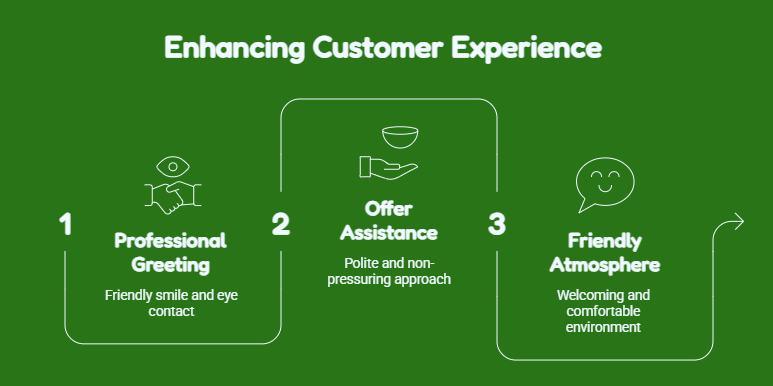
A professional greeting creates a strong first impression. Welcome customers with a friendly smile and maintain eye contact when appropriate. A simple greeting helps customers feel comfortable and valued from the moment they enter the store.
Offer assistance without putting pressure on customers. Some shoppers may need immediate help, while others prefer to browse first. A polite approach shows respect and makes customers more willing to ask questions when needed.
Creating a friendly atmosphere improves customer service in retail. Customers are more likely to stay longer, explore products, and make purchases when they feel welcomed. Positive interactions at the beginning of the shopping experience can lead to higher customer satisfaction and increased sales.
Understand Customer Needs
Understanding customer needs is essential for providing excellent retail customer service. Ask helpful questions to learn what customers are looking for and what problems they want to solve. This allows employees to provide more relevant assistance and product recommendations.
Active listening helps build trust and improves communication. Pay attention to customer preferences, budget requirements, and specific concerns. When customers feel heard, they are more likely to engage with staff and consider suggested products.
Focusing on customer needs can improve retail sales and customer satisfaction. Recommending suitable products based on individual requirements creates a better shopping experience. Customers are more likely to make purchases and return to the store when they receive personalized support.
Improve Product Knowledge
Product knowledge is a key part of effective customer service in retail. Employees should understand product features, uses, and benefits. This helps them answer customer questions accurately and confidently.
Well-informed staff can compare products and explain how each option meets specific customer needs. Clear explanations help customers make informed buying decisions. Customers often feel more confident purchasing when they receive reliable information.
Strong product knowledge can increase retail sales and customer satisfaction. Employees can recommend suitable products, highlight valuable features, and address concerns quickly. This improves the shopping experience and supports retail business growth.
Provide Fast and Efficient Service
Fast and efficient service improves the overall retail customer experience. Customers value quick assistance when they need information, product recommendations, or support. Prompt responses help reduce frustration and keep the shopping process smooth.
Long waiting times can lead to lost sales and lower customer satisfaction. Retail stores should focus on efficient checkout processes, organized workflows, and adequate staffing during busy periods. Quick service shows customers that their time is respected.
Efficient customer service can improve retail sales and encourage repeat visits. Customers are more likely to return when they receive timely assistance and complete their purchases without unnecessary delays. A smooth shopping experience helps build trust and loyalty over time.
Create a Personalized Shopping Experience
Personalized service helps customers feel valued and appreciated. Employees should take time to understand customer preferences, shopping habits, and product interests. This allows them to provide more relevant recommendations and assistance.
Recognizing returning customers can strengthen relationships and improve customer satisfaction. Simple actions such as remembering previous purchases or suggesting related products create a more enjoyable shopping experience. Customers often appreciate businesses that understand their needs.
A personalized retail customer experience can increase repeat purchases and customer loyalty. When customers receive relevant recommendations and individual attention, they are more likely to return to the store. This supports long-term retail business growth and helps increase retail sales.
Create a Personalized Shopping Experience
Personalized service helps customers feel valued and appreciated. Employees should take time to understand customer preferences, shopping habits, and product interests. This allows them to provide more relevant recommendations and assistance.
Recognizing returning customers can strengthen relationships and improve customer satisfaction. Simple actions such as remembering previous purchases or suggesting related products create a more enjoyable shopping experience. Customers often appreciate businesses that understand their needs.
A personalized retail customer experience can increase repeat purchases and customer loyalty. When customers receive relevant recommendations and individual attention, they are more likely to return to the store. This supports long-term retail business growth and helps increase retail sales.
Handle Customer Complaints Professionally
Customer complaints should be handled calmly and respectfully. Allow customers to explain their concerns without interruption. Careful listening helps employees understand the problem and shows customers that their feedback is valued.
When appropriate, apologize for the inconvenience and focus on finding a practical solution. Respond quickly and communicate clearly throughout the process. Customers are more likely to remain loyal when their issues are resolved fairly and efficiently.
Professional complaint handling can strengthen customer trust and loyalty. A positive resolution often turns a dissatisfied customer into a repeat customer. Managing complaints effectively improves customer satisfaction and supports long-term retail business growth.
Maintain a Clean and Organized Store
A clean and organized store creates a positive shopping environment. Customers feel more comfortable browsing products in a tidy space. A professional appearance also helps build trust and confidence in the business.
Clear product displays and easy store navigation improve the retail customer experience. Customers should be able to find products quickly without confusion. Well-organized shelves and proper signage make shopping more convenient and enjoyable.
Maintaining a clean store can improve customer satisfaction and increase retail sales. Customers are more likely to stay longer, explore additional products, and return for future visits. A well-maintained retail space supports both customer loyalty and business growth.
Encourage Upselling and Cross-Selling
Upselling and cross-selling can increase retail sales when used appropriately. Upselling involves suggesting a higher-value product, while cross-selling involves recommending related items. Both approaches help customers discover products that better meet their needs.
Recommendations should always focus on providing value to the customer. Employees should listen to customer requirements before suggesting complementary products or premium alternatives. Helpful recommendations feel supportive rather than sales-focused.
Effective upselling and cross-selling can increase the average transaction value and improve customer satisfaction. Customers benefit from products that enhance their purchase, while retailers generate additional revenue. This strategy supports retail business growth without creating pressure during the shopping experience.
Train Employees Regularly
Employee training is essential for delivering excellent retail customer service. Regular training helps staff improve communication skills, product knowledge, and customer interaction techniques. Well-trained employees are more confident when assisting customers and handling different situations.
Training should also focus on problem-solving, sales skills, and professionalism. Employees who understand how to address customer concerns and recommend suitable products can create a better shopping experience. Continuous learning helps staff stay updated on new products and service standards.
Regular employee training can improve customer satisfaction and increase retail sales. Skilled employees provide better service, build stronger customer relationships, and contribute to business growth. Investing in staff development is an investment in long-term retail success.
Use Customer Feedback to Improve Service
Customer feedback provides valuable insights into the shopping experience. Retail businesses can collect feedback through surveys, online reviews, suggestion boxes, and direct conversations. Understanding customer opinions helps identify strengths and areas that need improvement.
Regularly reviewing feedback allows retailers to spot common trends and concerns. Issues such as product availability, service quality, or checkout delays can be addressed before they affect more customers. Taking action on feedback shows customers that their opinions matter.
Using customer feedback to improve service can increase customer satisfaction and loyalty. Customers are more likely to return when they see their concerns being addressed. Continuous improvement helps create a better retail customer experience and supports long-term business growth.
Leverage Technology to Enhance Customer Service
Technology can help retailers deliver faster and more convenient customer service. Digital payment options, self-service tools, and online support channels improve the shopping experience. These solutions reduce delays and make transactions easier for customers.
Customer relationship management systems help businesses track customer preferences and purchase history. This information allows retailers to provide personalized recommendations and targeted offers. Loyalty programs can also encourage repeat purchases and strengthen customer retention.
Using technology effectively can improve customer satisfaction and increase retail sales. Customers appreciate convenience, speed, and personalized service. Modern tools help retailers build stronger relationships while supporting long-term retail business growth.
Build Long-Term Customer Relationships
Building long-term customer relationships is essential for sustainable retail business growth. Customers who trust a business are more likely to return for future purchases. Consistently providing excellent service helps create strong connections and encourages customer loyalty.
Retailers can strengthen relationships through loyalty programs, personalized offers, and customer appreciation initiatives. Regular communication and meaningful engagement help customers feel valued. Small efforts to recognize and reward loyal customers can have a significant impact.
Strong customer relationships lead to repeat purchases, positive reviews, and referrals. Loyal customers often spend more over time and recommend the store to others. Focusing on customer retention can improve retail sales and support long-term profitability.
Common Customer Service Mistakes to Avoid
Poor customer service can negatively affect customer satisfaction and sales. One common mistake is ignoring customers or failing to acknowledge them when they enter the store. Customers expect friendly and attentive service throughout their shopping experience.
Lack of product knowledge and poor communication can also create problems. Employees who cannot answer questions or provide accurate information may reduce customer confidence. Slow response times and unresolved concerns can further frustrate customers and lead to lost sales.
Avoiding these mistakes helps improve the retail customer experience and build trust. Professional behavior, clear communication, and prompt assistance create positive interactions. Retailers that focus on service quality are more likely to retain customers and encourage repeat business.
Conclusion
Excellent customer service is one of the most effective ways to increase retail sales and build customer loyalty. Businesses that focus on customer satisfaction, personalized experiences, and efficient service create a stronger shopping experience. These efforts help attract new customers while encouraging repeat purchases.
Successful retailers understand that every customer interaction matters. From professional greetings to effective complaint handling, each step contributes to customer trust and satisfaction. Well-trained employees and the right technology can further improve service quality and business performance.
Customer service is more than a support function. It is a powerful strategy for improving profitability and long-term growth. Retail businesses that invest in customer service are better positioned to increase sales, strengthen customer relationships, and achieve lasting success.