

Recycled products play an important role in protecting the environment. They are made from materials that have been collected, processed, and reused instead of being discarded as waste. Common recycled materials include plastic, paper, glass, metal, and rubber.
Using recycled products helps reduce the amount of waste sent to landfills and oceans. It also decreases the need to extract new raw materials from the environment. As a result, natural resources are conserved, pollution is reduced, and ecosystems face less pressure from industrial activities.
The environmental benefits of recycled products go beyond waste management. They help save energy, lower greenhouse gas emissions, support a circular economy, and encourage sustainable consumption. By choosing products made from recycled materials, individuals and businesses can contribute to a cleaner and more sustainable future.
Continuing with the next section.
What Are Recycled Products?
Recycled products are items made from materials that have been collected, processed, and transformed into new products. Instead of being thrown away after use, materials are recovered and reintroduced into the manufacturing process. This helps reduce waste and extends the life of valuable resources.
Definition of Recycled Products
A recycled product contains materials that were previously used and then processed for reuse. These products can be made entirely from recycled materials or contain a percentage of recycled content. They provide a practical way to reduce environmental impact while meeting everyday consumer needs.
Common Materials Used in Recycling
Many materials can be recycled and turned into useful products. Plastic is used to create containers, furniture, and packaging. Paper is recycled into notebooks, cartons, and tissue products. Glass can be remanufactured into bottles and jars, while metals such as aluminum and steel are commonly reused in construction and manufacturing. Rubber from old tires is often transformed into flooring, playground surfaces, and road materials.
How Recycled Products Help Reduce Waste
Recycled products help reduce waste by giving used materials a second life. Instead of ending up in landfills or natural environments, materials such as plastic, paper, glass, and metal are collected and processed for reuse. This reduces the growing waste problem and supports more sustainable resource management.
Diverting Waste from Landfills
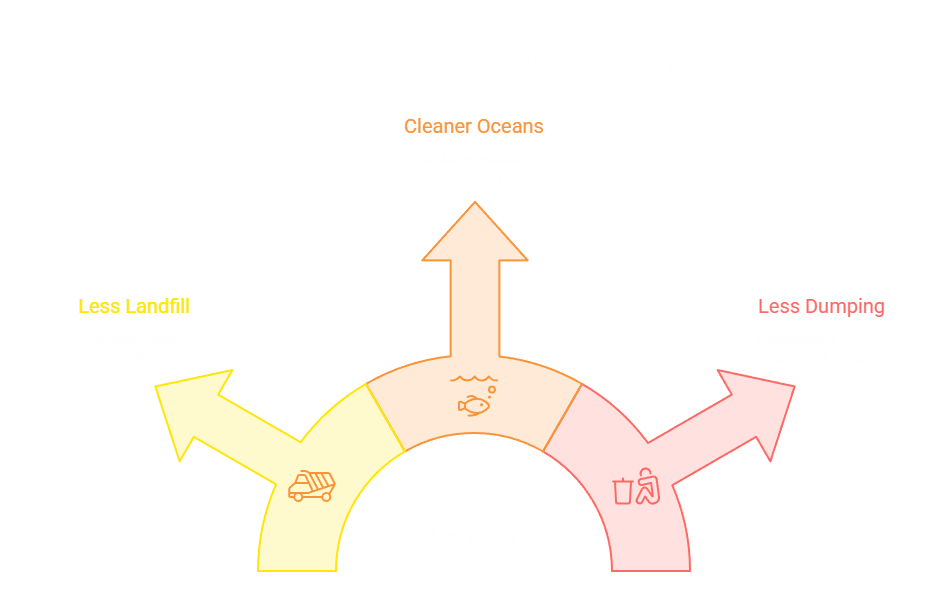
Landfills receive millions of tons of waste every year. When products are recycled, fewer materials are sent to these disposal sites. This helps extend landfill lifespan, reduces land use, and lowers the risk of soil and groundwater contamination caused by waste accumulation.
Reducing Ocean Pollution
Many recyclable materials, especially plastics, can end up in rivers and oceans if not properly managed. Recycling helps keep these materials out of marine environments. By reducing plastic waste, recycled products contribute to cleaner waterways and help protect marine life from pollution-related harm.
Preventing Illegal Dumping
Improved recycling practices encourage responsible waste disposal. When recyclable materials are collected and reused, there is less incentive for illegal dumping. This helps maintain cleaner communities, protects natural habitats, and reduces environmental damage caused by unmanaged waste.
Conservation of Natural Resources
One of the most important environmental benefits of recycled products is the conservation of natural resources. Recycling reduces the need to extract raw materials from the earth, helping preserve forests, minerals, water, and fossil fuels. This supports long-term sustainability and reduces environmental degradation.
Reducing Dependence on Raw Materials
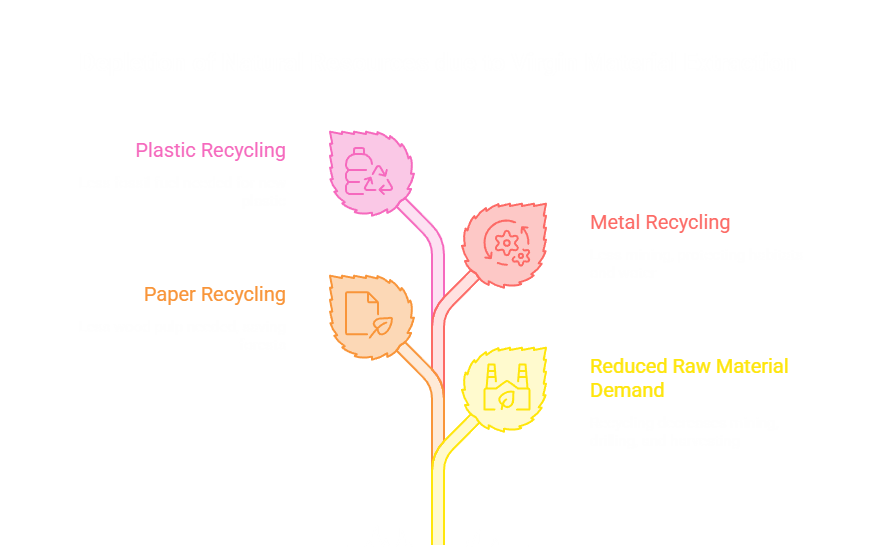
Manufacturing products from recycled materials requires fewer virgin resources. By reusing existing materials, industries can decrease mining, drilling, and harvesting activities. This helps protect natural landscapes and reduces pressure on limited resources.
Protecting Forests Through Paper Recycling
Paper recycling reduces the demand for new wood pulp. As a result, fewer trees need to be cut down for paper production. Conserving forests helps maintain biodiversity, improve air quality, and support ecosystems that depend on healthy tree cover.
Conserving Mineral Resources Through Metal Recycling
Metals such as aluminum, steel, and copper can be recycled multiple times without losing quality. Recycling these materials reduces the need for mining operations, which often cause habitat destruction, soil erosion, and water pollution.
Lowering Demand for Virgin Plastic Production
Producing new plastic requires petroleum and natural gas. Using recycled plastic materials reduces the need for these fossil fuels. This helps conserve non-renewable resources while lowering the environmental impact associated with plastic manufacturing.
Energy Savings Through Recycling
Recycling helps save significant amounts of energy compared to producing products from raw materials. Manufacturing with recycled materials often requires fewer processing steps, resulting in lower energy consumption. This makes recycling an effective way to reduce environmental impact while improving resource efficiency.
Less Energy Required for Manufacturing
Many recycled materials are easier to process than newly extracted resources. Manufacturers can use existing materials instead of starting from raw resource extraction and refinement. This reduces the energy needed for production and lowers overall operating costs.
Comparison Between Virgin and Recycled Materials
Products made from recycled aluminum, paper, glass, and plastic generally require less energy to manufacture than products made from virgin materials. For example, recycled aluminum uses substantially less energy than producing aluminum from mined bauxite ore. Similar energy savings can be achieved with other recyclable materials.
Impact on Fossil Fuel Consumption
Lower energy requirements mean less reliance on fossil fuels such as coal, oil, and natural gas. Reducing fossil fuel consumption helps decrease greenhouse gas emissions and supports cleaner energy use. As recycling rates increase, the demand for energy-intensive manufacturing processes continues to decline.
Reduction in Greenhouse Gas Emissions
Recycled products help reduce greenhouse gas emissions by decreasing the need for raw material extraction and energy-intensive manufacturing processes. Since recycling typically uses less energy, fewer carbon emissions are released into the atmosphere. This makes recycling an important strategy in the fight against climate change.
Lower Carbon Footprint of Recycled Products
Products made from recycled materials often have a smaller carbon footprint than those made from virgin resources. The reduced need for mining, transportation, and processing helps lower overall emissions throughout the product lifecycle.
Reduced Industrial Emissions
Industrial activities are major contributors to greenhouse gas emissions. Recycling reduces the demand for resource extraction and manufacturing operations that generate large amounts of carbon dioxide and other harmful gases. This contributes to cleaner production practices and improved environmental performance.
Supporting Climate Change Mitigation
By lowering emissions and conserving resources, recycled products support global efforts to slow climate change. Increased use of recycled materials can help businesses and consumers reduce their environmental impact while promoting a more sustainable economy for future generations.
Decreasing Air and Water Pollution
Recycled products help reduce air and water pollution by limiting the need for raw material extraction and manufacturing. Many industrial processes release harmful pollutants into the environment. Recycling reduces these activities, leading to cleaner air, healthier water systems, and a safer environment for people and wildlife.
Reduced Manufacturing Pollution
Producing goods from recycled materials often generates fewer air pollutants than manufacturing products from virgin resources. Lower industrial activity means reduced emissions of harmful substances that contribute to smog, acid rain, and poor air quality.
Lower Chemical Discharge
Mining, refining, and processing raw materials can release chemicals into nearby water sources. Recycling reduces the demand for these activities, helping minimize chemical runoff and contamination. Cleaner water supports healthier ecosystems and improves the quality of water available for human use.
Cleaner Water Systems
Recycling helps prevent waste materials from entering rivers, lakes, and oceans. By keeping recyclable materials within the production cycle, less pollution reaches natural water bodies. This protects aquatic life, preserves water quality, and supports long-term environmental sustainability.
Protection of Wildlife and Ecosystems
Recycled products play a vital role in protecting wildlife and natural ecosystems. By reducing waste, conserving resources, and lowering pollution levels, recycling helps create healthier environments for plants and animals. It also reduces the environmental damage caused by resource extraction and improper waste disposal.
Reducing Plastic Pollution in Oceans
Plastic waste is one of the biggest threats to marine ecosystems. Recycling plastic helps prevent it from reaching rivers, lakes, and oceans. This reduces the risk of animals becoming entangled in plastic debris or ingesting harmful materials that can lead to injury or death.
Preventing Habitat Destruction
Extracting raw materials often requires clearing forests, mining land, and altering natural landscapes. Recycling reduces the demand for these activities, helping preserve habitats for wildlife. Protecting natural habitats allows species to thrive and maintains ecological balance.
Supporting Biodiversity Conservation
Healthy ecosystems support a wide variety of plant and animal species. By reducing pollution and conserving natural resources, recycled products contribute to biodiversity conservation. This helps ensure that future generations can benefit from diverse and resilient ecosystems.
Supporting the Circular Economy
Recycled products are a key part of the circular economy. Unlike the traditional “take, make, dispose” model, a circular economy focuses on keeping materials in use for as long as possible. Recycling helps extend the life of resources, reduce waste, and create a more sustainable production system.
What Is a Circular Economy?
A circular economy is an economic model designed to minimize waste and maximize resource efficiency. Products and materials are reused, repaired, refurbished, and recycled instead of being discarded after a single use. This approach helps reduce environmental impact and supports sustainable growth.
Keeping Materials in Use Longer
Recycling allows valuable materials to remain in circulation rather than becoming waste. Materials such as plastic, paper, glass, and metal can be processed and used to create new products. This extends their useful life and reduces the need for continuous resource extraction.
Reducing Resource Extraction
By reusing existing materials, recycling decreases the demand for new raw resources. This helps conserve natural ecosystems, reduce energy consumption, and lower pollution levels. As more businesses adopt circular economy principles, recycled products become an essential part of sustainable development.
Economic and Environmental Sustainability Benefits
Recycled products provide both environmental and economic sustainability benefits. They help conserve natural resources, reduce pollution, and support responsible production practices. At the same time, recycling creates opportunities for innovation, resource efficiency, and long-term economic growth.
Sustainable Manufacturing Practices
Manufacturers that use recycled materials can reduce their dependence on virgin resources and lower production costs. Recycling also helps businesses minimize waste and improve resource efficiency. These practices contribute to more sustainable and environmentally responsible operations.
Encouraging Green Innovation
The growing demand for recycled products encourages companies to develop new recycling technologies and sustainable product designs. Businesses continue to find innovative ways to recover, process, and reuse materials. This drives environmental progress while creating new market opportunities.
Creating Long-Term Environmental Value
Recycled products support long-term sustainability by reducing resource depletion and environmental damage. Their continued use helps preserve natural ecosystems, lower carbon emissions, and reduce waste generation. Over time, these benefits contribute to a healthier environment and a more resilient economy.
Examples of Common Recycled Products
Recycled materials are used to create many everyday products. Advances in recycling technology have made it possible to transform waste materials into high-quality products for homes, businesses, and industries. Choosing these products helps reduce environmental impact while supporting sustainable resource use.
Recycled Plastic Products
Recycled plastic is commonly used to manufacture containers, packaging materials, outdoor furniture, storage bins, and construction products. Using recycled plastic reduces plastic waste and decreases the demand for virgin plastic production.
Recycled Paper Products
Many paper products are made from recycled paper fibers. Common examples include notebooks, cardboard boxes, newspapers, tissue paper, and office paper. Recycling paper helps conserve forests and reduces the amount of waste sent to landfills.
Recycled Glass Products
Glass can be recycled repeatedly without losing quality. Recycled glass is often used to make new bottles, jars, tiles, and decorative products. This process helps conserve raw materials and reduces energy consumption during manufacturing.
Recycled Metal Products
Metals such as aluminum and steel are among the most widely recycled materials. Recycled metals are used in beverage cans, construction materials, automotive parts, and household appliances. Recycling metal saves energy and reduces the environmental impact of mining activities.
How Consumers Can Support Recycled Products
Consumers play an important role in the success of recycling programs and sustainable manufacturing. Every purchasing decision can influence the demand for recycled materials and encourage businesses to adopt environmentally responsible practices. Supporting recycled products helps create a more sustainable and resource-efficient economy.
Choosing Products Made from Recycled Materials
One of the easiest ways to support recycling is to buy products that contain recycled content. Many manufacturers clearly label recycled materials on packaging. Choosing these products helps increase demand for recycled resources and reduces the need for virgin raw materials.
Supporting Sustainable Brands
Consumers can support companies that prioritize sustainability and responsible manufacturing. Businesses that use recycled materials, reduce waste, and promote environmental initiatives contribute to a healthier planet. Purchasing from these brands encourages more companies to adopt similar practices.
Proper Waste Segregation
Effective recycling starts with proper waste separation. Sorting recyclable materials such as paper, plastic, glass, and metal helps improve recycling efficiency and reduces contamination. By following local recycling guidelines, consumers can ensure that more materials are successfully recycled and reused.
Common Misconceptions About Recycled Products
Despite the growing popularity of recycling, many misconceptions still exist about recycled products. Some people believe recycled items are lower in quality, more expensive, or difficult to find. In reality, advancements in recycling technology have significantly improved the performance, affordability, and availability of recycled products.
Quality Concerns
A common myth is that recycled products are inferior to products made from virgin materials. However, many recycled products meet the same quality and safety standards as new products. Materials such as glass, aluminum, steel, and paper can often be recycled without significant loss of performance or durability.
Cost Concerns
Some consumers assume recycled products are always more expensive. While prices can vary, many recycled products are competitively priced with conventional alternatives. As recycling systems become more efficient and demand increases, the cost of recycled materials continues to become more affordable.
Availability Concerns
Another misconception is that recycled products are difficult to find. Today, recycled materials are used in a wide range of everyday items, including packaging, office supplies, furniture, clothing, and construction materials. Many retailers and manufacturers now offer sustainable product options, making recycled products more accessible than ever before.
Future of Recycled Products in Environmental Protection
The future of recycled products looks promising as governments, businesses, and consumers continue to prioritize sustainability. Growing environmental awareness and technological advancements are increasing the use of recycled materials across industries. These developments will play a significant role in reducing waste and protecting natural resources.
Advances in Recycling Technology
Modern recycling technologies are making it easier to recover and process materials efficiently. Improved sorting systems, advanced recycling methods, and innovative manufacturing techniques help increase the quality and quantity of recycled materials. These advancements support the production of more sustainable products.
Growing Consumer Awareness
Consumers are becoming more aware of the environmental impact of their purchasing decisions. As demand for eco-friendly products increases, more companies are investing in recycled materials and sustainable production practices. This shift encourages broader adoption of recycling across industries.
Government Sustainability Initiatives
Many governments are introducing policies and programs that promote recycling and waste reduction. These initiatives include recycling targets, environmental regulations, and incentives for sustainable manufacturing. Such efforts help create a stronger recycling infrastructure and support long-term environmental protection.
| Environmental Area | Impact of Recycling |
| Waste Reduction | Less waste sent to landfills |
| Air Quality | Reduced industrial emissions |
| Water Quality | Lower chemical contamination |
Lower chemical contamination | Reduced need for raw materials |
| Climate Change | Lower greenhouse gas emissions |
| Wildlife Protection | Reduced habitat destruction |
| Energy Consumption | Lower manufacturing energy use |
Conclusion
Recycled products offer numerous environmental benefits, from reducing waste and conserving natural resources to lowering pollution and greenhouse gas emissions. They help decrease the demand for raw material extraction, save energy during manufacturing, and support the protection of wildlife and ecosystems. These advantages make recycled products an essential part of sustainable development.
Recycling also supports the circular economy by keeping valuable materials in use for longer periods. As recycling technologies continue to improve and consumer awareness grows,